Reversing the Circle
“Leaders get the followers they deserve. Followers get the leaders they deserve” (Obolensky, 2016). As organizational leaders develop strategy it is important to consider how both upward and downward leadership influence each department and each employee. The strategy that an organization adopts depends quite heavily on each employee and their individual willingness and ability to perform their job functions independently. Followership is an individual’s ability and willingness to follow a leader.
Obolensky (2016) described five levels of followership:
- Wait to be told
- Ask to be told
- Seek approval for a recommendation
- Seek approval for action undertaken
- Get on and inform in a routine way
A certain level of interdependence or codependency exists with every leader/follower relationship. An employee’s behavior depends heavily on, and is influenced by the leader’s behavior. “To consider . . . ‘Level 5 followership’ in isolation to leadership behavior would be a serious omission as the one will, to some extent drive the other, and vice versa” (Obolensky, 2016). The confidence that a follower demonstrates can influence the trust that a leader places in him. If a follower shows low confidence in his own skill, a leader may struggle to place trust in him. Obolensky (2016) depicted the loss of confidence that leaders experience in what is described as “A typical vicious circle for leaders:”
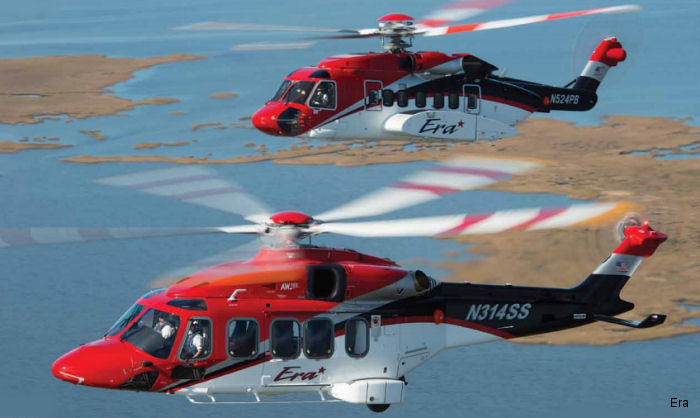
The “vicious circle” can be especially vicious at times at Era Helicopters. Although I will describe one example in fairly basic terms, it is really a complex issue involving federal regulations, liability, customer input, and operational control.
Occasionally a helicopter will have a maintenance discrepancy while flying to or from an offshore oil platform. In the eleven years I have been employed by Era Helicopters I have had a few minor discrepancies occur such as engine or transmission chip lights, oil temperature, or oil pressure lights. A couple years ago management requested that pilots not make any decisions about maintenance issues and airworthiness of aircraft themselves. The request was that any maintenance issue that occurred offshore, other than serious emergencies that require immediate action, needed to be brought to the attention of management so that they could make a decision what action to take. This used to not be the case. In the past a pilot held responsibility for determining the best way to proceed whether it was to land as soon as possible, continue to the destination, or return to the airport. A couple years ago management began asking more and more questions, and requesting more and more details of any aircraft discrepancy that occurred offshore. A few events were so heavily “armchair quarterbacked” by management that the pilots involved felt like they had no support of the decisions they had made. As this began to happen more frequently, pilots began to worry they would be negatively critiqued if they made a decision, so they began to involve management in the process, calling any time they had a discrepancy. As pilots involved management more in the decision making process, management began to feel that the pilots were less capable of making decisions independently. They now have taken away the decision making ability from the pilots completely. For many pilots this has been a source of frustration as they are forced to wait for management decisions before they can proceed. On the other hand, taking the decision away from the pilots shields us from blame and disciplinary action. I honestly do not believe that this has reduced the morale or followership at Era Helicopters very much. I believe this to be the case because, in general, we operate at Level 1 or Level 2 followership; pilots are assigned to specific contracts, or specific charter flights. We are essentially in the category of “wait to be told what to do,” or “ask to be told.”
Lower level followership can be enhanced and raised to higher levels through action on the part of both pilots and management; the “vicious circle” can be reversed! The level of followership that management expects from an individual pilot should be dependant on experience and the trust he or she has earned. When a pilot calls in to report a maintenance discrepancies offshore, management should consider their level of experience with company policies and with the aircraft, as well as the trust they have earned. As opposed to simply making the decision and telling the pilot what to do (Level 1) the manager should ask the pilot what he or she suggests (Level 2). As greater trust and experience are developed the pilot could be conditioned to call, not only to report a discrepancy, but to be prepared with a proposed recommendation of how to proceed (Level 3). As trust continues to grow, pilots would be enabled to make their own decisions and proceed with the action, however a report would be required after the event (Level 4). The most trusted pilots would be asked to provide a periodic summary of any issues (Level 5).
In order for the “vicious circle” to be reversed, pilots would need to earn the trust of management by proving they possess the skill, knowledge, and experience to make important airworthiness decisions, and to know when to involve management or maintenance technicians to help make the decision. Pilots can foster this environment by developing a professional relationship with their managers, by understanding the expectations and pressures that are placed on managers by senior management (Gabarro and Kotter, 1980), and by thinking systematically about the organization (How to lead, 2000). Pilots need to understand how a maintenance discrepancy affects pilots, mechanics, billing, marketing, and operations.
References
Gabarro, J. J., & Kotter, J. P. (2005). Managing Your Boss. Harvard Business Review, 83(1), 92-99.
How to lead when you're not the boss. (cover story). (2000). Harvard Management Update, 5(3), 1.
Obolensky, N. (2016). Complex adaptive leadership: Embracing paradox and uncertainty (2nd ed.) New York, NY: Taylor & Francis